with the growth of cross-border business, cn2 broadband hong kong and singapore routing strategies and cross-border bandwidth optimization practices have become the core of network design. from an engineering perspective, this article introduces routing selection, delay control, packet loss diagnosis and bandwidth scheduling methods for hong kong-xinjiang links to help operations and technical teams improve user experience and link stability.
the cn2 links between hong kong and singapore are mostly backbone-level international exports, characterized by few routing hops and delay fluctuations affected by submarine cables and domestic interconnection configurations. understanding link transfer points, autonomous system paths, and egress strategies can help plan for more stable cross-border transmission and more consistent latency performance.
the core of routing policy lies in bgp path selection and local priority configuration. it is recommended to dynamically adjust med, localpref and as path filtering based on delay, packet loss and bandwidth utilization, and combine community tags to implement traffic diversion by service type to ensure that important traffic is prioritized on low-latency hong kong or singapore uplinks.
latency and packet loss are key indicators of cross-border experience. commonly used diagnoses include continuous ping, traceroute analysis, intermediate hop rtt decomposition, and traffic mirroring statistics. combining historical baselines and threshold alarms, you can quickly locate problems caused by submarine cable congestion, overseas node flooding, or local egress policies.
at a practical level, prioritize link aggregation (lacp or multi-link bgp) and use traffic splitters or sd-wan policies for load balancing by session or quintuple. adjusting weights based on time periods or business types, combined with on-demand expansion and downsampling strategies, can stabilize cross-border throughput performance while keeping costs under control.
to implement qos on edge devices, you need to accurately classify traffic (voice, video, interactive, back-end synchronization, etc.), and then set queues, priorities, and discard policies. for cross-border links, priority queue bandwidth reservation and fair scheduling during congestion should be ensured to avoid key services being engulfed.
the complete monitoring system includes delay, packet loss, jitter, bandwidth utilization and bgp route change monitoring. establish threshold alarm and automatic switching strategies (cold standby or hot standby), and formulate fault recovery sops, including route rollback, link switching, and collaborative troubleshooting processes with upstream, to improve the availability of cross-border links.
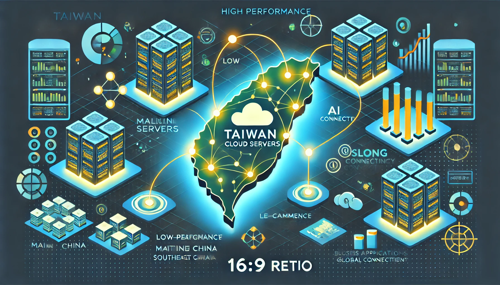
when deploying cross-border links, you need to pay attention to data sovereignty, privacy compliance and local access requirements. backup path design should consider the interconnection policies of different autonomous systems and operators. network device configuration and log storage should meet compliance audit requirements, while ensuring that change management and rollback mechanisms are in place.
regarding the actual implementation of cn2 broadband hong kong and singapore routing strategies and cross-border bandwidth optimization, it is recommended to take observability as the starting point, first establish baselines and alarms, and then gradually optimize bgp strategies, link aggregation and qos. combining automation and regular evaluation can improve the stability and user experience of cross-border services while reducing costs.
- Latest articles
- Why Do E-commerce And Video Platforms Need Japanese Native IP Websites To Ensure A Good Experience?
- Survival Strategies And Differentiated Service Explorations For Small And Medium-sized Vendors In The U.S. Server Hosting Industry
- How To Quickly Raise The Entry-level Salary Tier Of Hong Kong IDC Data Centers Through Certificates And Project Experience
- A Practical Guide To Comparing Malaysian Cloud Server Price Lists For Different Models And Bandwidth Options
- Where To Buy Taiwan Native IPs With Legal And Compliant Buying Guides
- Which Cloud Server In Vietnam Is A Good Case, Sharing Best Practices And Implementation Experiences Across Different Industries
- Gaming Industry Special Edition: Thailand Acceleration Server Rankings And Player Experience Report
- IP Reputation And Blacklist Risk Management When Choosing Hong Kong Multi-IP Server Hosting
- How Cross-border Developers Can Choose A German VPS Hosting Solution That Is Compliant And Supports GDPR
- In-depth Analysis Of The Pros And Cons Of Hong Kong Server CN2 And A Guide For Small And Medium-sized Enterprises To Buy
- Popular tags
-

User Experience Optimization: Singapore Server Cloud Server Access Acceleration Combined With CDN Integration Solution
This article introduces a solution combining user experience optimization for Singapore server cloud server access acceleration with CDN, covering latency analysis, caching strategies, intelligent routing, monitoring metrics, and implementation steps, suitable for business optimization targeting Asia-Pacific users. -

How Are Alibaba Cloud’s Servers In Singapore? A Practical Guide To Auto-scaling And High-availability Architectures
A detailed analysis of Alibaba Cloud’s servers in Singapore, covering practical tips for elastic scaling and high-availability architectures, Auto Scaling strategies, load balancing, and data backup recommendations, to help engineers deploy and maintain systems efficiently. -

Interpretation Of The Differences Between Alibaba Singapore Line Cn2 Connection And International Export Bandwidth
professionally analyze the differences in routing, delay, packet loss and bandwidth guarantee between alibaba's singapore line cn2 connection and conventional international egress bandwidth, provide line selection and testing suggestions, and help enterprises optimize network performance from singapore to china/global.